

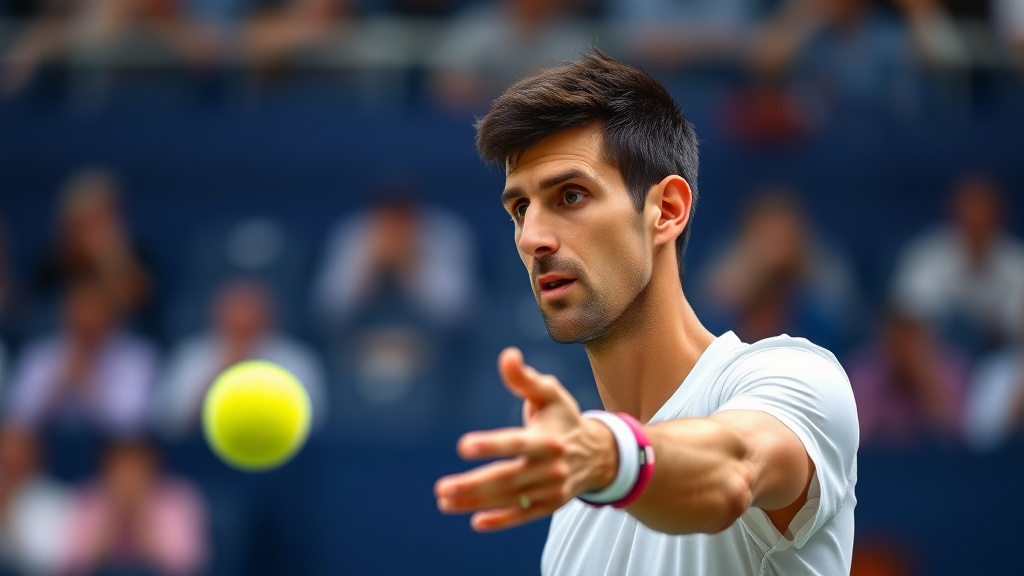
Novak Djokovic, one of tennis’s most elite players, reveals the sophisticated serving methods that have driven his mastery on the court. In this detailed resource, discover the exact technical fundamentals, positioning, and psychological approaches behind his iconic serve. Whether you’re a rising tournament competitor seeking to elevate your game or a passionate fan wanting to understand elite-standard technique, Djokovic’s expert insights will transform your understanding of one of tennis’s most critical shots.
Developing the Grip and Stance Foundation Basics
The basis of an successful serve begins with proper grip selection, a key factor that Djokovic highlights during his coaching. The continental grip, preferred by most elite athletes, keeps your hand at the base of the racket, allowing for maximum pronation and control. This grip helps players to generate exceptional racket head speed while maintaining accuracy. Djokovic stresses that grip pressure must stay loose during the setup phase, reducing tension that restricts unrestricted movement and reduces serve velocity. Stable grip placement ensures reliable serve repetition.
Your setup establishes the foundation for dynamic power output and aim precision during the serve. Djokovic recommends the stationary stance, where both feet stay stationary until after contact with the ball. Set your feet at shoulder width, with your front foot aimed at the net post and your back foot angled approximately forty-five degrees. This setup creates optimal weight transfer from back to front leg, generating tremendous force through your kinetic chain. Proper stance positioning also strengthens balance and court recovery, allowing you to shift smoothly into court placement after serving.
Advanced Serve Mechanics and Delivery
Mastering the serve demands knowledge of the intricate mechanical principles that separate elite players from the rest. Djokovic emphasizes the importance of synchronizing your body’s kinetic chain, starting from your legs and flowing through your core, shoulders, and arm. Proper weight transfer and timing are essential for producing force while maintaining control. The serve is not just an arm movement; it’s a coordinated full-body action that demands precision and reliability throughout your playing career.
The Technique of Pronation
Pronation is the key rotating motion of your forearm that happens at the point of impact with the ball. Djokovic shows how proper pronation creates tremendous racket head speed and spin, allowing you to produce aggressive serves that are hard to return. The movement begins during the acceleration phase and continues through the follow-through, creating that distinctive snap that defines professional serves. Mastering this technique requires consistent practice and physical awareness to ensure proper timing and execution.
Building effective pronation involves understanding the relationship between your grip and wrist placement. Djokovic suggests maintaining a continental grip, which naturally enables the pronation motion. The key is allowing your wrist to stay relaxed yet controlled, allowing the forearm to rotate with power through contact. This technique not only improves serve velocity but also enhances your capacity to place serves with accuracy in various court positions, providing you strategic benefits during matches.
Establishing Consistent Performance
Consistency in service delivery distinguishes champions from sporadic winners. Djokovic emphasizes the importance of consistent mechanics, where every serve follows the same fundamental sequence regardless of match pressure or fatigue. Building a consistent routine before each serve—from your stance to your ball toss—establishes a solid foundation. Video analysis and coaching input help pinpoint mechanical flaws that might undermine accuracy. Consistent training with defined objectives develops muscle memory and confidence in your technique.
Accuracy stems from understanding how small changes affect where the ball lands and movement patterns. Djokovic teaches competitive players to practice serving into specific zones, building the capacity to target corners and sidelines with precision. Mental visualization paired with repeated practice strengthens your ability to deliver serves under pressure. By incorporating these consistency-building strategies into your practice routine, you’ll build the reliable serve that characterizes professional-level play.
Mental Strategies and Match Application
Mental toughness distinguishes elite servers from solid performers. Djokovic highlights the significance of keeping control during key points on serve, particularly at break points and set points. He develops a pre-serve routine that grounds his concentration and manages breath flow, allowing him to deliver with consistency under pressure. This psychological preparation includes mental imagery where he mentally rehearses successful serves before delivery. By separating his feelings and maintaining unwavering concentration, competitive players can transform their serve into a dependable tool that executes at peak level when crucial moments arrive.
Match application demands tactical intelligence beyond mechanical skill. Djokovic deliberately adjusts service positioning, speed, and spin according to opponent weaknesses and match situations. He reads return positioning and adjusts accordingly, exploiting gaps in the court methodically. During critical junctures, he relies on his most reliable serves rather than chasing unlikely winners. This adaptive approach, paired with statistical evaluation of rival patterns, enables players to maximize serve effectiveness. Understanding the right time to be aggressive versus taking a cautious approach distinguishes elite servers from those who falter when stakes are highest.
