

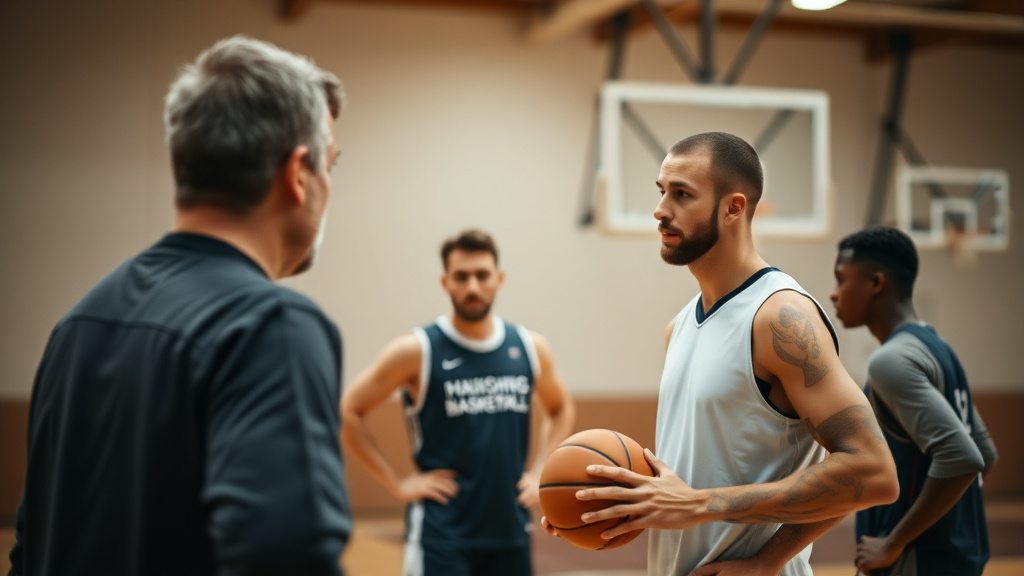
In the current intense basketball environment, achieving victory requires much more than developing core fundamentals. Contemporary coaching has developed to focus on emotional toughness and comprehensive player development, acknowledging that champions are created through psychological strength and individualized training. This piece investigates how leading coaches integrate mindfulness, handling pressure, and personalized coaching systems to forge not only better athletes but stronger versatile players. Learn about the proven methods revolutionizing basketball teams globally.
Developing Psychological Resilience Through Adversity
Viewing Obstacles as Development Chances
Modern basketball coaches recognize that adversity functions as a catalyst for cognitive advancement. Rather than protecting players from difficult situations, elite coaches intentionally design challenging scenarios during practice and competition. These controlled adversities teach players to manage pressure, recover from disappointment, and cultivate strategic thinking essential for winning at the highest level. By treating losses as growth experiences, coaches build a development-focused perspective that turns difficulties into pathways to success and sustained excellence.
The mental structure of resilience training goes further than court performance. Coaches use visualization techniques, positive self-talk protocols, and stress-inoculation exercises to develop mental readiness for intense competitive situations. This comprehensive approach helps athletes develop control over emotional responses, maintain focus during difficult stretches, and bounce back quickly from mistakes. Players discover resilience is not something you’re born with but a trainable skill that improves with consistent practice and deliberate engagement to manageable challenges throughout their growth process.
Building a Culture of Accountability and Support
Successful basketball teams establish environments where responsibility and encouragement work together seamlessly. Coaches establish clear standards while offering steadfast support, making certain players grasp that missteps are fundamental to growth rather than sources of shame. This well-rounded approach enables athletes to take strategic risks, experiment with different skills, and push their boundaries without concern of critical judgment. Team members learn to hold each other accountable while recognizing each player’s progress, building emotional security critical for authenticity and real development.
Building resilient teams demands coaches to exemplify emotional intelligence and adaptive thinking continuously. When coaches show how they navigate their own irritations, mistakes, and setbacks, players absorb these behaviors and create similar coping mechanisms. Frequent team conversations about difficulty, failure narratives, and comeback approaches normalize the challenges embedded in athletic development. This honest exchange builds togetherness, mutual respect, and a shared recognition that emotional strength emerges from shared experiences and genuine human connection.
Implementing Systematic Difficulty-Based Training Initiatives
Progressive adversity training programs systematically expose players to progressively harder mental and physical challenges. Coaches design practice scenarios replicating game pressure, such as high-stakes free throw situations, deficit recovery situations, and performance tests with consequences. These structured experiences allow players to develop confidence in their capacity to execute when stakes are elevated. Consistent practice with controlled challenges strengthens neural connections associated with composed concentration and sound decision-making, enabling players to access these resources during real game situations.
Evidence-based coaching methods track players’ psychological responses to adversity, identifying personal pressure points and effective coping strategies. Coaches customize support based on individual characteristics, learning styles, and past performance history, understanding that resilience development is tailored to each person. Advanced programs combine sports psychology consultants, physiological monitoring tools, and psychological training to enhance mental performance. This thorough, personalized approach guarantees every player develops the psychological strength required to achieve peak performance when it matters most.
Strengthening Essential Athlete Competencies
Building a top-tier basketball team requires coaches to methodically build core competencies that surpass basic skill execution. Modern coaching methodologies focus on developing well-rounded players who possess tactical expertise, tactical awareness, and psychological fortitude. This holistic strategy ensures athletes can respond to diverse game situations, navigate obstacles, and consistently perform at elite levels. Coaches dedicate considerable effort identifying individual strengths and weaknesses, then creating customized training plans that address specific gaps. This individualized system speeds up athlete development and builds confidence necessary for winning performance.
Technical Proficiency Development
Technical skill advancement forms the base of basketball excellence, requiring focused repetition and continuous enhancement. Coaches employ sophisticated coaching techniques that decompose difficult techniques into digestible elements, allowing players to establish foundational abilities progressively. Video analysis, kinetic analysis, and competitive data analysis guide coaches in pinpointing skill gaps. Modern facilities furnish competitors with advanced technology and technology to speed up skill acquisition. Graduated challenge progression ensure players maintain suitable difficulty while building competency structurally and reliably.
Effective technical training integrates sport psychology strategies that improve focus, confidence, and performance consistency. Instructors create structured practice environments that mirror competitive pressure, compelling players to deliver techniques under authentic scenarios. Visualization techniques techniques complement conditioning work, permitting players to practice mentally techniques before actual execution. Feedback systems deliver quick adjustments and reinforcement, enhancing skill development. This combined strategy changes technical development from repetitive drills into focused, outcome-driven training that produces quantifiable gains.
- Shooting accuracy through proper technique and regular practice sessions
- Ball control and footwork using progressive complexity progressions
- Position defense and footwork fundamentals training
- Court transition effectiveness across court spaces
- Rebound skills and positioning strategy mastery
Individualized skill development plans acknowledge that each player possesses unique learning preferences, athletic characteristics, and progression rates. Coaches assess starting performance levels through standardized testing and match performance evaluation, establishing personalized improvement objectives. Continuous progress assessment modifies practice difficulty and key skill components, ensuring continuous advancement. Collaborative mentorship and team-based skill exchange boost group team improvement while strengthening individual learning. This tailored method optimizes player potential while developing group unity and peer support networks critical for sustained success.
Fostering a Culture of Continuous Improvement
Implementing Feedback Systems and Accountability
High-performing basketball programs rely on open communication channels that empower players to recognize their advancement and improvement areas. Top-level coaches establish consistent personal conferences, film review meetings, and performance metrics that create accountability while preserving mental safety. This structured approach ensures players receive constructive criticism without worry about evaluation, creating an environment where mistakes become learning opportunities rather than reasons for demoralization.
Accountability frameworks operate most successfully when players participate in establishing their own objectives and assessing success. Coaches who involve athletes in this process foster ownership and intrinsic motivation, transforming outside expectations into personal commitments. When players grasp the “why” behind performance benchmarks and have agency in defining success, they develop increased resilience and commitment to ongoing self-improvement throughout their basketball journey.
Honoring Advancement and Strengthening Confidence
Acknowledgment of incremental progress proves crucial for maintaining player motivation and confidence during difficult training periods. Coaches who celebrate small victories—improved defensive positioning, successful decision-making, or mental toughness displays—reinforce positive behaviors and build psychological momentum. This approach recognizes that mastery develops gradually, affirming the effort invested in skill acquisition and mental growth while sustaining player engagement.
Building confidence requires consistent recognition of effort alongside results, emphasizing that growth emerges from persistence and resilience. Coaches who highlight individual improvements, regardless of team outcomes, create psychological security that promotes taking risks and skill development. This measured strategy converts pressure into motivation, enabling players to pursue excellence while preserving the psychological stability required for peak performance.
Building Team Cohesion and Shared Excellence
Ongoing development becomes significantly stronger when embedded within a team culture that values collective growth. Coaches build this culture by creating unified guidelines, celebrating teammate successes, and building coaching partnerships where seasoned performers guide developing athletes. This integrated system converts personal growth into a team asset, building cohesion while improving collective results.
Programs that emphasize collective excellence build resilient teams capable of navigating adversity together. When players support each other’s growth and understand how each person’s advancement contributes to group performance, they build stronger dedication and psychological investment. This environment of shared responsibility and celebration creates enduring strategic edges, ensuring that basketball programs remain dynamic and improving over time.
